Is him the Most Handsome Man Ever?
In that masterpiece by Jean-Pierre Melville, Delon transformed from merely beautiful into eternally cool. Wearing a gray trench coat and fedora, speaking very little, he played a hitman who moved through Paris like a ghost. His face became almost expressionless, but somehow even more magnetic. Delon proved something extraordinary in that performance: true charisma does not always come from trying to impress people. Sometimes the strongest presence belongs to the person who seems emotionally unreachable.
That became the essence of Alain Delon’s appeal. He did not beg for attention. He did not perform masculinity loudly. He simply existed on screen with absolute confidence. Modern celebrities often appear carefully managed, eager to maintain likability. Delon felt different. There was distance in him. Mystery. Audiences could admire him, desire him, even envy him, but they never fully understood him.
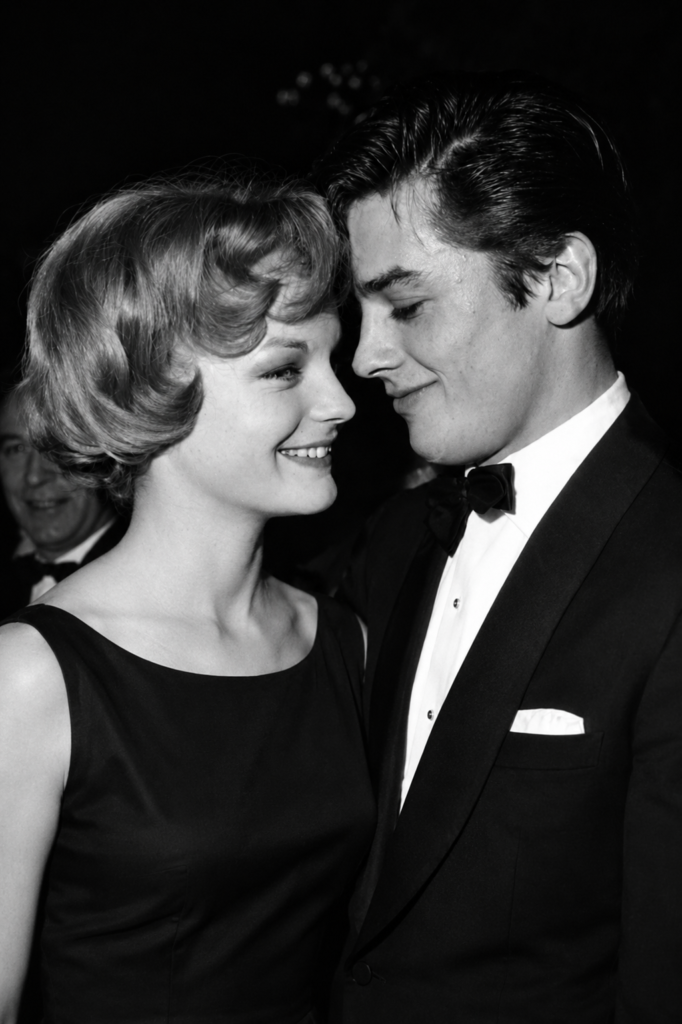
Women across the world adored him. Men admired him or wanted to imitate him. Fashion followed him naturally. Even his imperfections added to the legend. Stories often mention that Delon disliked smiling too widely because he felt insecure about his teeth. Ironically, that restraint only increased his mystique. His controlled expressions became part of his signature style.
His romantic life also fed the myth. Delon was linked to some of the most admired women of his era, including Romy Schneider, Brigitte Bardot, Jane Fonda, and Mireille Darc. Jane Fonda once described him as “the most beautiful human being.” Coming from someone surrounded by Hollywood stars, that statement carried enormous weight.
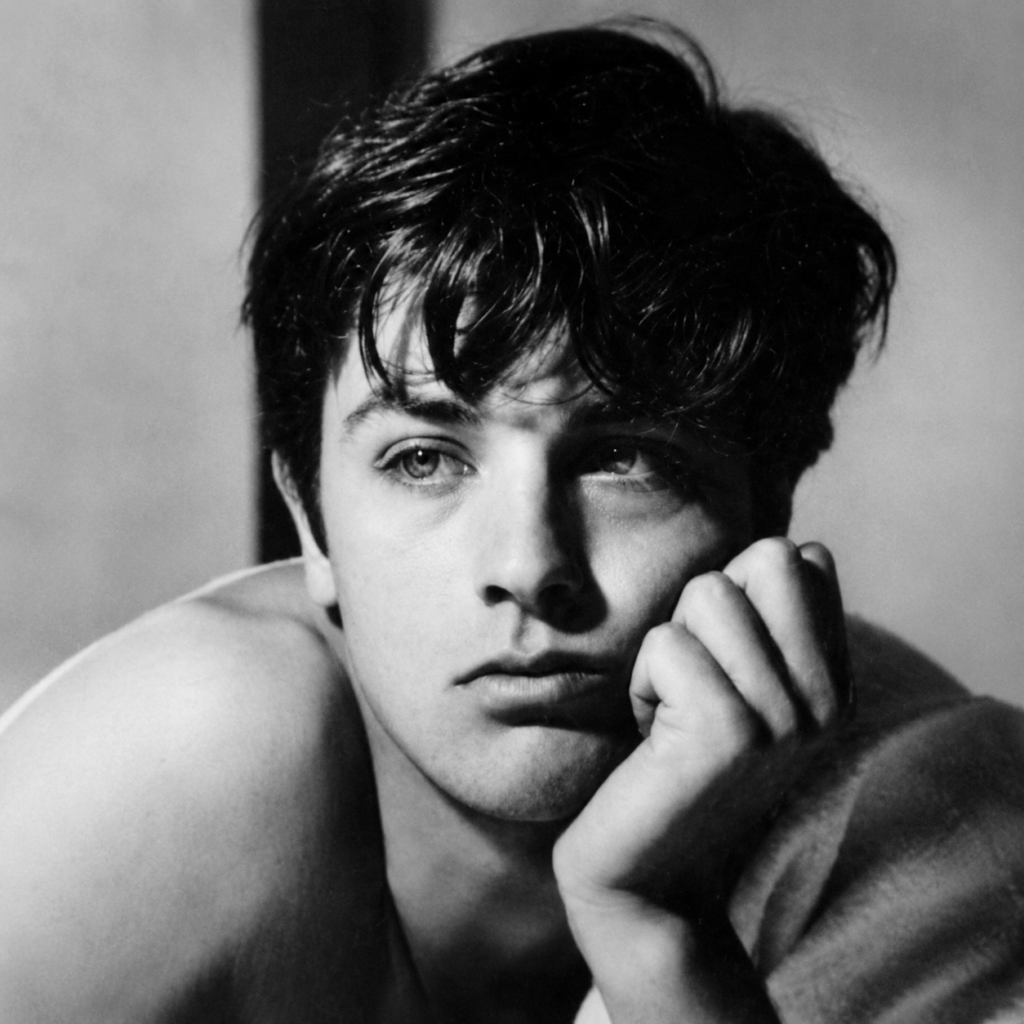
Part of what keeps Delon legendary today is that his beauty belonged to a different era of cinema. Modern celebrity culture is saturated with filters, cosmetic procedures, social media branding, and constant exposure. Alain Delon existed before all of that. His beauty felt natural, almost mythological. Audiences discovered him through giant cinema screens, magazine covers, and rare television appearances. The distance between star and public created fascination. He was not endlessly accessible online. That mystery preserved his image.
And unlike many actors remembered mainly for appearance, Delon understood how to use beauty as a cinematic weapon. He often reduced his performances instead of exaggerating them. While other actors expressed emotion loudly, Delon would remain still. His silence forced audiences to study his eyes, his posture, his smallest gestures. That restraint made him unforgettable.
There is also the tragic dimension of beauty itself. One reason audiences remain fascinated by young Alain Delon is because cinema freezes time. In real life, beauty fades. Youth disappears. But films preserve moments forever. Through movies like “Purple Noon,” “Le Samouraï,” and La Piscine, Delon remains eternally suspended at his peak. He never truly ages inside those frames.