73% of men become inconsistent in the gym once they get a girlfriend.
A New Relationship Can Quietly Replace Your Gym Routine—Here’s How to Stop It

Falling in love changes almost everything. Your priorities shift, your schedule changes, and suddenly you have someone you genuinely want to spend your free time with. There’s nothing wrong with that. In fact, healthy relationships can improve your life in countless ways. But there’s one hidden consequence many people don’t notice until months later: the habits that once kept you fit, disciplined, and energetic slowly begin to disappear.
It rarely happens overnight.
Nobody wakes up one morning and decides, “I’m done with the gym forever.”
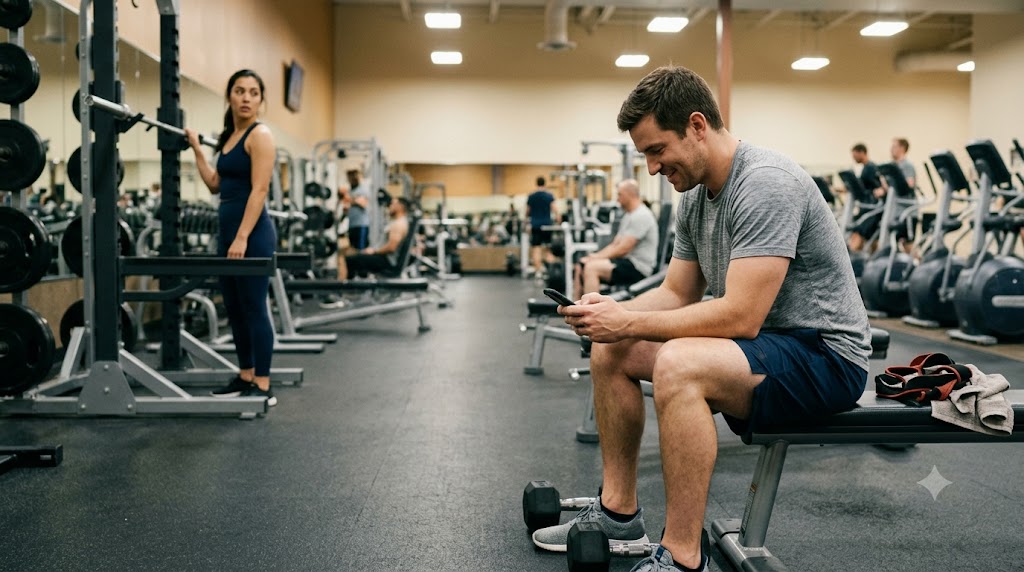
Instead, it happens through dozens of small decisions that seem harmless at the time.
You skip Monday’s workout because your partner wants to go out for dinner. You promise yourself you’ll make it up on Tuesday, but you stay up late watching movies together. Wednesday arrives, and you’re too tired to train before work. By the weekend, you’ve missed three workouts, eaten out four times, and haven’t prepared a single healthy meal.
One week becomes two.
Two weeks become a month.
Eventually, your old routine feels like someone else’s life.

This pattern is surprisingly common because new relationships naturally compete with the routines that once occupied your time. Date nights replace evening workouts. Weekend trips replace meal preparation. Sleeping in together replaces early-morning cardio. None of these activities are bad on their own, but when they consistently replace healthy habits, your fitness starts to decline without you realizing it.
One of the biggest psychological reasons this happens is something researchers often describe as a shift in motivation. Before entering a relationship, many people are highly motivated to improve their appearance, confidence, and overall fitness. They train consistently because they enjoy looking and feeling their best. Once they enter a committed relationship, that external motivation often fades. Their brain unconsciously says, “Mission accomplished.”
The danger is believing that fitness only matters when you’re trying to attract someone.
The truth is exactly the opposite.

The habits that helped you attract a partner are the same habits that help you become a better partner.
Regular exercise improves your mood, increases patience, reduces stress, boosts confidence, enhances sleep quality, and supports long-term health. These aren’t just personal benefits—they directly influence the quality of your relationship.
Think about the version of yourself that walked into the relationship.

Those qualities were attractive because they reflected consistency and self-respect. When you stop taking care of yourself, it’s often those deeper qualities—not just your physique—that begin to fade.
Another common mistake is confusing quality time with constant togetherness.
Healthy couples don’t need to spend every available minute with each other. Strong relationships are built by two individuals who continue growing while supporting each other’s growth.
If going to the gym for an hour creates conflict, the real issue usually isn’t the workout—it’s communication and expectations.
Partners who genuinely care about each other understand that maintaining personal health benefits both people.
Unfortunately, many couples accidentally build routines centered around convenience instead of health. Friday becomes pizza night. Saturday becomes brunch followed by dessert. Sunday becomes movie night with snacks. After work means takeout instead of cooking. Before long, those occasional treats become daily habits.
You won’t always feel excited to train after a long workday. You won’t always want to prepare healthy meals when ordering food is easier. But successful people understand that discipline matters most on the days motivation disappears.
One practical solution is treating workouts like non-negotiable appointments.
Most people wouldn’t casually skip an important business meeting because someone suggested dinner. They wouldn’t ignore a doctor’s appointment because they felt a little tired.